
Navigating a vast online slots library requires more than luck; it demands a technical understanding of game mechanics, platform stability, and financial workflows. This exhaustive manual deconstructs Jackpot city slots, moving beyond superficial review to provide a systematic framework for evaluating its software, calculating real-world bonus value, and executing secure transactions. We analyze the ecosystem from a professional player’s perspective, focusing on actionable data and procedural clarity.
Before You Start: The Pre-Engagement Checklist
Prior to registration, perform these mandatory due diligence steps to align platform capabilities with your technical and jurisdictional requirements.
- Verify License & Jurisdiction: Confirm the operator holds a valid license from a recognized authority (e.g., Malta Gaming Authority, UKGC) and that your country of residence is not on the restricted list.
- Client Software Audit: Determine if the platform is browser-based (HTML5) or requires a downloadable client. Check system requirements for OS compatibility and RAM recommendations.
- Network Protocol Check: Ensure your network allows secure SSL/TLS connections (ports 443) and does not block gambling-related domains, which can cause connectivity drops during play.
- Payment Gateway Pre-Approval: Research available deposit and withdrawal methods. Note processing times, potential fees, and minimum/maximum limits that could impact your cashflow strategy.
- Game Provider Whitelist: Identify the primary software providers (e.g., Microgaming, NetEnt) powering the slots. Cross-reference this with your preference for specific RNG (Random Number Generator) certification standards.
Technical Registration & Account Configuration
The registration process is the first point of system integration. A flawless setup here prevents future authentication and verification failures.
- Data Input Layer: Navigate to the registration modal. Input all personal details exactly as they appear on your official government-issued ID (e.g., passport, driver’s license). Discrepancies (e.g., “Mike” vs “Michael”) will trigger a manual verification halt.
- Communication Protocol Setup: Provide a valid, accessible email address. This is critical for 2FA (Two-Factor Authentication) and transaction logs. Avoid disposable email services as they may be blocked by the platform’s security policies.
- Credential Generation: Create a strong password (12+ characters, mixed case, numbers, symbols). Store it in a secure password manager. Do not reuse credentials from other online accounts.
- Post-Registration Verification: Log in and immediately navigate to the account verification section. Upload the required documents (ID, proof of address, payment method proof) in high-resolution format. Pre-emptive verification accelerates first withdrawal processing.
- Session Management: Configure session timeout preferences and device management settings. Log out from all sessions periodically to refresh your authentication token.
Mobile Client: Installation & Performance Diagnostics
The mobile experience is governed by client architecture. Jackpot City typically offers a responsive web app and, in some jurisdictions, a native application.
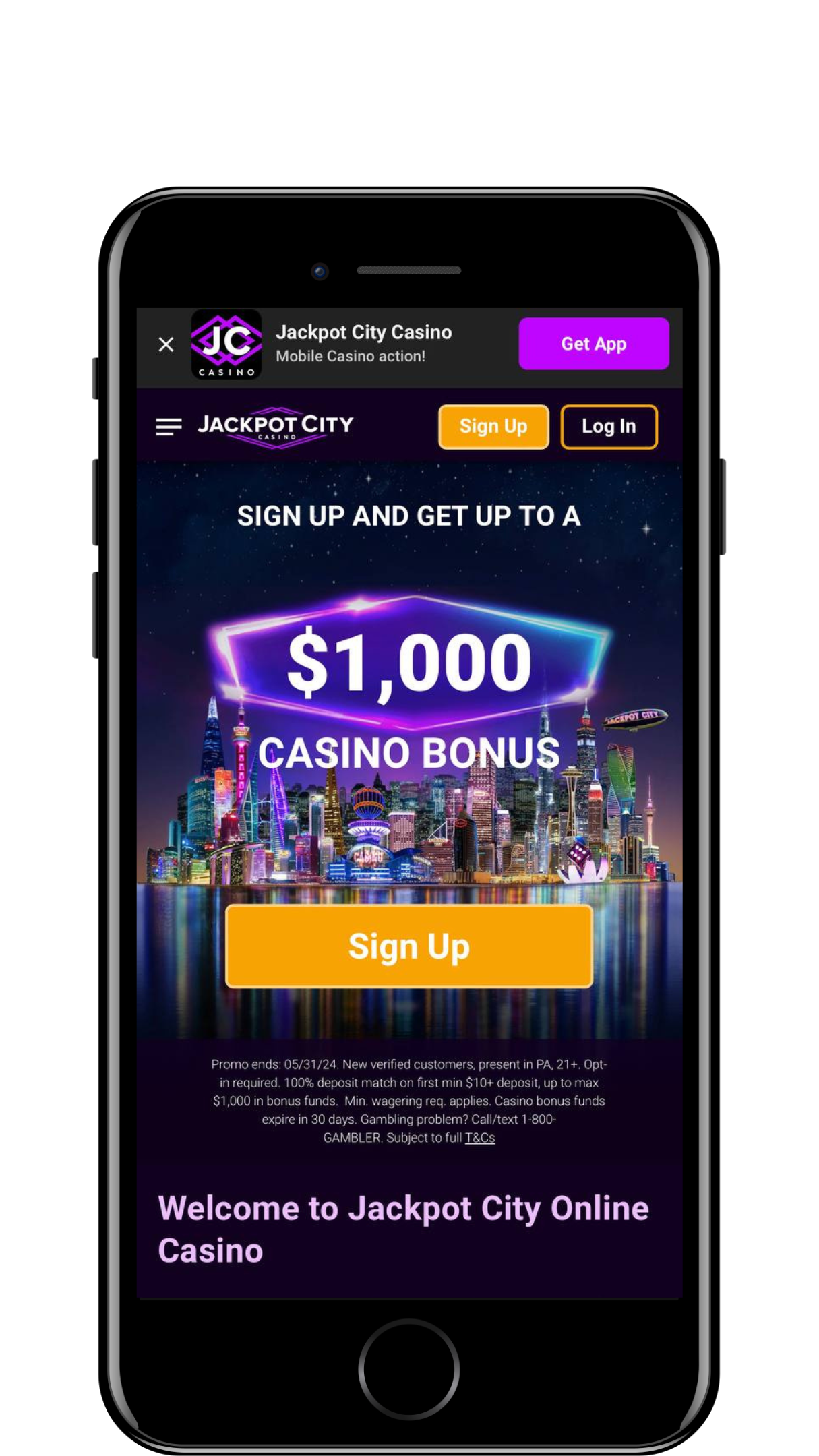
Installation Pathway: For a native app, download only from the official Apple App Store or Google Play Store. For the web app, simply bookmark the site to your home screen. Performance Benchmarks: Monitor load times for 3D-rendered slots on your device. If performance lags, disable background apps, clear the browser cache, or switch to a less graphically intensive game variant. Ensure “Auto-Rotate” is enabled for optimal screen orientation.
Slots Library: A Structural Analysis & RTP Deep Dive
The core value proposition lies in the game library. Analysis must move beyond quantity to assess volatility, hit frequency, and feature triggers.
Provider Architecture: The library is predominantly powered by Microgaming’s platform, ensuring games are audited for RNG fairness. Look for games with published RTP (Return to Player) reports, often accessible in the game’s information or paytable screen. Game Classification:
- Classic Slots: Low volatility, simple math models. Suitable for extended session play.
- Video Slots: Medium to High volatility. Analyze the bonus buy feature (if available) for cost vs. expected value.
- Progressive Slots: Networked (Mega Moolah) and standalone progressives. Understand the contribution percentage to the jackpot pool (typically 1-5% of each bet).
| Game Type | Example Title | Volatility Index | Published RTP | Key Feature |
|---|---|---|---|---|
| Mega Progressive | Mega Moolah | Very High | 88.12% (Base) – 94% (Non-Jackpot) | Randomly triggered progressive wheel |
| High Volatility Video | Immortal Romance | High | 96.86% | Multi-tiered Chamber of Spins |
| Medium Volatility | Thunderstruck II | Medium | 96.65% | Great Hall of Spins with 4 feature types |
| Low Volatility Classic | Break Da Bank Again | Low | 95.7% | Multiplier wilds on reels 2, 3, 4 |
The Mathematics of Bonuses: A Calculated Approach
Welcome bonuses are marketing tools with defined cost structures. The key metric is Expected Value (EV) after wagering.
Scenario: A 100% match bonus up to $200 with a 40x wagering requirement (Deposit + Bonus) on slots with an average 96% RTP.
Deposit: $200.
Bonus Credited: $200.
Total Playable Balance: $400.
Total Wagering Required: $400 * 40 = $16,000.
Expected Loss from Wagering: $16,000 * (1 – 0.96) = $640.
Expected Value of Bonus: Initial Balance – Expected Loss = $400 – $640 = -$240.
Interpretation: This negative EV is standard. The goal is to select bonuses with lower wagering (e.g., 20x-30x), or those applying only to the bonus amount, to reduce the expected loss. Always read the contribution weights: Table games may contribute 10%, making them inefficient for clearing requirements.
Financial Infrastructure: Deposit & Withdrawal Protocols
The banking system is a critical path. Optimize for security, speed, and cost-efficiency.
| Method | Deposit Processing | Withdrawal Processing | Technical Notes |
|---|---|---|---|
| Credit/Debit Card (Visa/MC) | Instant | 1-5 Business Days | Subject to issuer’s cash advance policies. Strong fraud monitoring. |
| E-Wallet (Skrill, Neteller) | Instant | Up to 24 Hours | Often excluded from welcome bonuses. Provides a layer of financial abstraction. |
| Bank Transfer | 1-3 Business Days | 3-7 Business Days | Low cost, high traceability. Use for large withdrawals. |
| Prepaid Voucher (Paysafecard) | Instant | Not Available | Deposit only. Useful for strict budget control. |
Withdrawal Execution Flow: 1) Initiate withdrawal from verified account. 2) Trigger mandatory pending period (24-72 hours for internal audit). 3) Request passes to payment processor. 4) Funds arrive per method’s timeline. Pro Tip: Always use the same method for deposit and withdrawal where possible to streamline anti-money laundering (AML) checks.
Security Architecture & Fair Play Assurance
Technical security is non-negotiable. Assess the following layers:
- Encryption: The site must use 256-bit SSL encryption (look for HTTPS padlock).
- Certification: Independent audits by eCOGRA or iTech Labs for RNG and game fairness. Certificates should be publicly linked.
- Responsible Gaming Tools: Technical implementations for deposit limits, loss limits, wager limits, and self-exclusion (Cool-Off, Time-Out) must be easily accessible in account settings.
- Privacy Policy: Review data handling procedures. GDPR compliance is a strong indicator of robust data management.
System Troubleshooting: Common Faults & Resolutions
Issue 1: Game fails to load, shows black screen or spinning icon.
Diagnosis: Typically a local cache issue, Flash/JavaScript conflict, or network firewall block.
Resolution: Clear browser cache and cookies. Ensure JavaScript is enabled. Try a different browser (Chrome, Firefox). Disable VPN/proxy temporarily. For downloadable client, run as Administrator and check for updates.
Issue 2: Withdrawal is pending for over 72 hours.
Diagnosis: Standard security hold or incomplete verification.
Resolution: Contact support via live chat. Preemptively submit any requested verification documents. Ensure no active bonus wagering is pending.
Issue 3: Bonus not credited after a qualifying deposit.
Diagnosis: Bonus may require manual activation via a promotional code, or the deposit method is excluded.
Resolution: Check the “Bonuses” section of your account for an “Activate” button. Review full bonus terms for eligible payment methods. Contact support with the transaction ID.
Issue 4: Intermittent disconnections during gameplay.
Diagnosis: Unstable internet connection or ISP throttling.
Resolution: Run a speed test. Switch from Wi-Fi to a wired connection if possible. Close bandwidth-intensive applications. Contact your ISP to inquire about traffic shaping policies.
Extended Technical FAQ
Q1: What is the specific RNG algorithm used for Jackpot City slots?
A: The platform utilizes a Mersenne Twister algorithm, a well-established pseudorandom number generator, which is then cryptographically seeded for unpredictability. This is independently audited for fairness.
Q2: How are progressive jackpot seed amounts determined and guaranteed?
A: Seed amounts (the starting jackpot value) are set by the game provider. The jackpot pool is held in a separate, audited trust account to ensure it is available for payout, regardless of operator solvency.
Q3: Can I use a script or betting bot to automate gameplay?
A: No. The use of any unauthorized third-party software to interact with the games or manipulate the client is strictly prohibited and will result in immediate account closure and forfeiture of funds.
Q4: What happens to my bet if the game crashes or my session times out mid-spin?
A: Modern game servers utilize a “provably fair” transaction logging system. The outcome is determined at the moment the spin button is pressed. If a disconnect occurs, log back in and check your transaction history; the result will be reflected in your balance.
Q5: Are there any session-level statistics or data export features for analysis?
A: Most licensed casinos provide a detailed transaction history (CSV/PDF format) listing all bets, wins, game names, and timestamps. This is essential for personal audit and bankroll management. Access it in your account statement section.
Q6: What is the technical difference between a “free spin” from a bonus and one triggered in-game?
A: Bonus free spins are a credit mechanism with predetermined value per spin and wagering requirements attached to winnings. In-game free spins are a feature of the slot’s math model, with winnings typically added directly to your main (cash) balance.
Q7: How does multi-currency account handling work from a conversion perspective?
A: If you deposit in a currency different from your account’s base currency, the funds are converted at the operator’s daily exchange rate, often with a small margin (1-3%). It is always optimal to hold your account in your native currency to avoid double conversion on deposit/withdrawal.
Q8: What backend protocol is used for live dealer games integrated with the slots lobby?
A: Live dealer games typically use a low-latency streaming protocol like WebRTC or HLS, delivered from a secure studio environment. They are a separate software product, though integrated into the same cashier and user account.
Conclusion
Mastering the Jackpot city slots environment is an exercise in systems thinking. Success is not defined by a single spin but by the meticulous management of your interaction with the platform’s technical, financial, and regulatory layers. By applying this handbook’s framework—from pre-registration checks and mathematical modeling of bonuses to understanding withdrawal protocols and troubleshooting client errors—you transform from a casual user into an informed participant. Prioritize security, understand the cost of bonuses, choose games based on their published math models, and always utilize the responsible gaming tools provided. This disciplined, technical approach is the true foundation of sustainable engagement with any online gaming platform.